A few months ago, the MAH board and staff started discussing whether and how to create a formal policy for advocacy activities. I blogged about it, and you offered several good pointers on what should be considered in constructing it. Now, we've created one (unanimously approved by the board), and I wanted to share it with you and the process behind it.
Want to go straight to the policy?
Here it is.
Why create an advocacy policy?
In our case, it started when we were asked to sign onto a local petition to save a community garden under threat. We realized that we needed a systematic way to evaluate these kinds of requests--a tool that would help us evaluate when to say yes and why to say no.
Regardless of your institutional mission, nonprofits are all in the advocacy business. We champion causes through the partnerships we build, the programs we offer, and the stories we tell. While most nonprofits regularly advocate for our own institutions and/or sector, I think it's just as important to advocate for the interests of the communities in which we serve.
If you've been considering this for awhile, now is the time to act. Everyone is going to the ballot this year in the United States. Our museum has already had several requests to lend our support to bond measures that will be on the ballot in 2016. While 501c3 nonprofits cannot endorse candidates, it is completely kosher to endorse bond measures, propositions, and other ballot measures. If you want to be engaged in 2016 ballot measures relevant to your institution or community, now is a great time to develop a policy for how and when to do so.
How did we create it?
A small team of trustees and staff members worked together on our advocacy policy. We reviewed a handful of existing policies from other institutions (local and national, museums and not), discussed their attributes, and started drafting/stealing/reworking with a Google doc. We only met once in person. It was especially valuable to have activists, retired government employees, and social service leaders on the team; they brought helpful perspectives on what advocacy means beyond a cultural context.
The policy our board approved is intentionally broad. We wanted enough of a foundation to ground our advocacy without prescribing it. We wanted enough of a process to provide clarity and structure without too many hoops. We wanted it to make "yes" possible but "no" completely reasonable as well.
Any surprises?
One of the biggest "aha" moments I had in the development of the policy is that our museum was already doing advocacy in a variety of ways before we had a policy. We educate the public on local issues. We invite people from community organizations and campaigns to use the museum as a platform to share their message. We partner with thousands of artists and organizations, providing staff support and engagement in their work. We incubate a youth art and social change program. We host community festivals like the recent Artivism event that showcase local changemakers. We've made changes to our museum--bilingual signage, all-gender restrooms--to be better advocates for the diverse visitors who walk through our doors.
Though we started working on the policy specifically to address situations when we are asked by an outside group for formal endorsement, we realized as we dove in that we should also use this opportunity to contextualize endorsements as just one of many advocacy tools at our disposal. Advocacy is not just for executives and boards of trustees. The result is a broad policy that empowers our whole team to think about our roles as advocates for our community in the work we do.
I know our policy is not perfect. We're just starting to use it to evaluate endorsement requests coming our way, and I imagine we'll find some ways we want to clarify or change what we've written. But I wanted to share it with you: in appreciation of your role in its development, in curiosity as to your response, and in hopes it might inspire you to draft your own.
Because no matter the content, I heartily advocate for such policies to exist.
If you are reading this via email and would like to share a comment or question, you can join the conversation here.
Showing posts with label social justice. Show all posts
Does Your Institution Have an Advocacy Policy?
In October of 2015, I got a call from a community partner. The Beach Flats Community Garden was under threat, and this friend of the garden wanted our help. The garden, which had operated for 20 years in a predominately low-income Latino neighborhood near the beach, was losing its lease with a private property owner. The City proposed moving the garden to a nearby plot of City-owned land, but gardeners felt that this disruption would literally uproot an essential community place. Garden supporters and partners were putting together a petition to try to push the City and the property owner to find a long-term solution to allow the garden to remain in place. And so the collaborator on the phone asked: would I sign the petition on behalf of our museum?
The outside partner wasn't the only one asking. Several museum staff members had gotten involved in the political action personally outside of work, and they wanted to know if we could sign on organizationally. This wasn't just a question of what was moral or politically useful in the abstract. It was a question about our commitment to our partners, to local sites of cultural importance, and to the Latino families with whom we have been working intensely to build stronger relationships.
I watched as other partner organizations signed on, uncertain what to do. I didn't know how likely the petition was to have influence, but I knew that signing on was important to the people asking.
Ultimately, I decided we couldn't sign - not because it was the necessarily the wrong thing to do, but because we didn't have any kind of policy beyond directorial discretion to decide when it might be appropriate to take a political stand as an institution.
I took the issue to the board, and we agreed that we need to develop some kind of advocacy policy to be able to answer these phone calls with confidence. Our board/staff advocacy task force is meeting this Friday to get the work started, and so I'm curious: has your organization tackled this question? How have you addressed the challenges and opportunities to raise your institutional voice on local issues?
I'm going into this meeting with a strong feeling that our policy can't be to always say no. Our museum has a growing advocacy component to our work. Our theory of change focuses on an intended impact of building a stronger, more connected community. We already embrace the reality that manifesting that impact requires work beyond our building, beyond traditional museum activities. We are proud of our wide-ranging community partnerships, proud to amplify unsung voices and stories, proud to tackle issues of equity and social justice through our programming.
But that's all work we do on our terms. What good are we as a partner if we can't step up and support our partners on their terms, too? I'd hate to be the kind of organization that embraces partners when we need them but not when they need us.
I don't have an opinion about whether our eventual policy should have enabled us to sign that particular petition. But I do want to see us develop a policy that enables us to address these opportunities thoughtfully, with our mission, theory of change, and community values at heart.
How have you, or would you, go about this? What resources might be helpful as we embark on this work?
If you are reading this via email and would like to share a comment or question, you can join the conversation here.
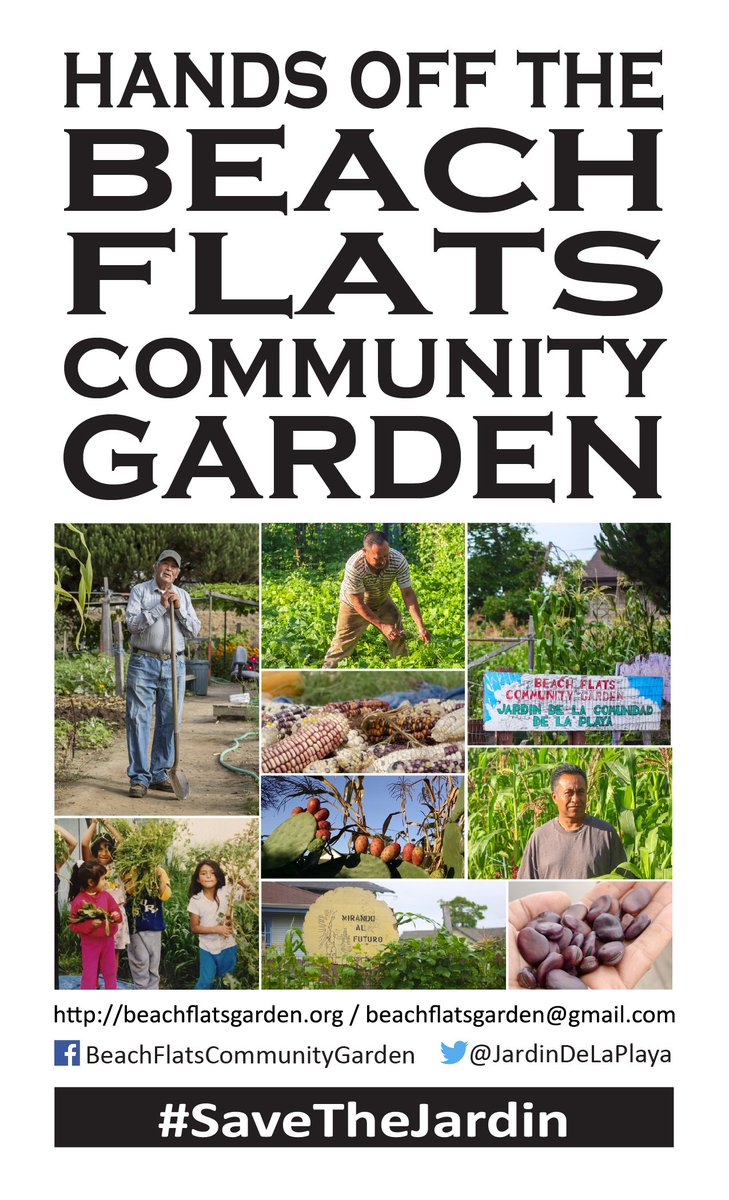
The outside partner wasn't the only one asking. Several museum staff members had gotten involved in the political action personally outside of work, and they wanted to know if we could sign on organizationally. This wasn't just a question of what was moral or politically useful in the abstract. It was a question about our commitment to our partners, to local sites of cultural importance, and to the Latino families with whom we have been working intensely to build stronger relationships.
I watched as other partner organizations signed on, uncertain what to do. I didn't know how likely the petition was to have influence, but I knew that signing on was important to the people asking.
Ultimately, I decided we couldn't sign - not because it was the necessarily the wrong thing to do, but because we didn't have any kind of policy beyond directorial discretion to decide when it might be appropriate to take a political stand as an institution.
I took the issue to the board, and we agreed that we need to develop some kind of advocacy policy to be able to answer these phone calls with confidence. Our board/staff advocacy task force is meeting this Friday to get the work started, and so I'm curious: has your organization tackled this question? How have you addressed the challenges and opportunities to raise your institutional voice on local issues?
I'm going into this meeting with a strong feeling that our policy can't be to always say no. Our museum has a growing advocacy component to our work. Our theory of change focuses on an intended impact of building a stronger, more connected community. We already embrace the reality that manifesting that impact requires work beyond our building, beyond traditional museum activities. We are proud of our wide-ranging community partnerships, proud to amplify unsung voices and stories, proud to tackle issues of equity and social justice through our programming.
But that's all work we do on our terms. What good are we as a partner if we can't step up and support our partners on their terms, too? I'd hate to be the kind of organization that embraces partners when we need them but not when they need us.
I don't have an opinion about whether our eventual policy should have enabled us to sign that particular petition. But I do want to see us develop a policy that enables us to address these opportunities thoughtfully, with our mission, theory of change, and community values at heart.
How have you, or would you, go about this? What resources might be helpful as we embark on this work?
If you are reading this via email and would like to share a comment or question, you can join the conversation here.
Subscribe to:
Posts (Atom)
Not A Great Deal Seems To Have Happened In the Last Few Years. Really Pretty Hopeless.
For some reason Google found this for me today � and note the article date. Dr Mukesh Haikerwal Resigns from NEHTA By Petrina Smith Friday, ...
-
Some major changes have been occurring in the tropical Pacific. Most of the last winter was characterized by La Nina conditions in which th...
-
For some reason Google found this for me today � and note the article date. Dr Mukesh Haikerwal Resigns from NEHTA By Petrina Smith Friday, ...
-
My daughter and I have been enthusiastic and faithful viewers of this year�s NHK Taiga drama, �Sanada Maru.� We looked forward to visiting ...
